iatrogenic effect
  • Home
  • Purpose
  • About
  • News
  • Contact
HEALTHCARE- / HOSPITAL-ACQUIRED INFECTIONS: THE COST TO SOCIETY

​What Does The Average Patient Need to Know?

STATISTICS
INFECTION PREVENTION & CONTROL (IP&C) + PATIENT SAFETY & QUALTY of CARE {PS&QoC)

What Does the World Health Organization (WHO) Say?
Picture
Picture
According to WHO:
  1. Patient safety is a serious global public health issue recognizing patient safety & quality of care as a critical dimension of universal health coverage.  Since WHO launched the Patient Safety Programme in 2004, >140 countries have worked to address the challenges of unsafe care.
  2. One in 10 patients in developed countries may be harmed by a range of errors / adverse events while receiving hospital care.
  3. At any given time, healthcare- / hospital-acquired infections (HAIs) affect 14 out of every 100 patients admitted (7 in developed & 10 in developing countries).  Hundreds of millions of patients are affected worldwide each year.  Simple & low-cost infection prevention & control measures, such as appropriate hand hygiene, can reduce the frequency of HAIs by more than 50%.
  4. With an estimated 1.5M different medical devices & over 10K types of devices available worldwide, the majority of the world's population is denied adequate access to safe & appropriate medical devices within their health systems. More than half of low- & lower middle-income countries do not have a national health technology policy which ensures effective medical device planning, assessment, acquisition, & management.
  5. Unsafe injections decreased by 88% from 2000 to 2010 wherein key injection safety indicators measured in 2010 show that important progress has been made in the reuse rate of injection devices (5.5% in 2010), while modest gains were made through the reduction of the number of injections per person per year (2.88 in 2010).
  6. An estimated 234M surgical operations are performed globally every year &, because surgical care is associated with a considerable risk of complications, surgical care errors contribute to a significant burden of disease.  50% of complications associated with surgical care are avoidable, suggesting safe surgery requires a teamwork approach.
  7. About 20%–40% of all health spending is wasted due to poor-quality care, whereby safety studies show that additional hospitalization, litigation costs, infections acquired in hospitals, disability, lost productivity, & medical expenses cost some countries as much as US$ 19 billion annually. The economic benefits of improving patient safety are therefore compelling.
  8. Industries with a perceived higher risk such as the aviation & nuclear industries have a much better safety record than health care, ie: there is a 1 in 1,000,000 chance of a traveller being harmed while in an aircraft, whereas in comparison, there is a 1 in 300 chance of a patient being harmed during health care.
  9. Patient & community engagement / empowerment are key - people’s experience & perspectives are valuable resources for identifying needs, measuring progress, & evaluating outcomes.
  10. Hospital-to-hospital partnerships aimed at improving patient safety & quality of care have been used for technical exchange between health workers for a number of decades. These partnerships provide a channel for bi-directional patient safety learning & the co-development of solutions in rapidly evolving global health systems.

We Aim to Educate, Inform, Encourage, & Facilitate

Picture
​WEB PAGE CONTENT
TARGETED BLOG POSTS
CURRENT HEALTHCARE NEWS
LINKS TO PEER-REVIEWED ARTICLES
HEALTHCARE INFORMATION TECHNOLOGY (HIT)
HEALTHCARE INFORMATION MANAGEMENT SYSTEMS (HIMS) 
STATISTICS
DATA ANALYSIS
EXPERT WITNESS

WEB TRAINING SESSIONS
​
QUALITY-OF-CARE GUIDELINES
INFECTION COONTROL RECOMMENDATIONS​

WHAT WAS THE GENESIS (PUN INTENDED) OF THIS INITIATIVE?

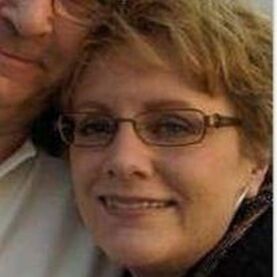
In Memoriam ~ Judy Foley

Judith "Judy" / "Jude" Daryl Foley (b 17-Sep-1955 / d 29-Sep-2012) suffered what a statistics prof friend of the family described as an "Alphabet of Medical Errors" leading to her death over the span of 54 hours:
  • A.  In the Day Surgery Department of The Ottawa Hospital (TOH), Riverside Campus - a day surgery site - a surgeon performed laparoscopic gall bladder removal surgery (aka: cholecystectomy) knowing from previous x-ray and MRI images that the: "...neck of the gall bladder was ill-defined..." 
  • B.  It was later learned that the surgeon punctured Judy's duodenum at approximately 8:00 AM Thu 27-Sep-2012, bearing in mind this should have been a low-risk 'routine' laparoscopic procedure, which - unfortunately - was compounded by:
  • C.  Bile leakage from an approx 5 mm dia hole which wasn't observed during a pre-close video inspection and started flooding Judy's body cavity with toxic fluids
  • D.  Even though Judy was experiencing excruciating pain requiring multiple Dilaudid doses, she was cleared for discharge from this day surgery campus the same day (Thu 27-Sep) at 1:45 PM after a 1 hr 45 min delay to administer additional pain killers (ie: just under 6 hours following surgery)
  • E.  Judy was discharged from that day surgery campus without having ingested fluids or voiding (contrary to the Campus' published guidelines)
  • F.  The discharge nurse's response to the family's questions about the pain Judy was experiencing was to describe it as: "..normal.."
  • G.  The discharge resident's solution to Judy's excruciating abdominal and chest pain (that doubled her over in agony) was to provide a prescription for Dilaudid
  • H.  The family then had to find a pharmacy to fill that prescription, not an easy task for such a drug (opioid) when it was not the patient presenting to request the prescription to be filled; unfortunately,  the Dilaudid gave no relief whatsoever when administered to Judy at 4:00 PM Thu 27-Sep-2012
  • I.  When, at 7:00 PM,  911 was called because Judy was literally 'climbing-the-walls' in agony, her pulse was 50% higher than normal and she was breathing in short gasps (what we later learned to be tachypnea)  [BTW: both of these vitals we later learned to be known precursors to septic shock]
  • J.  Even though Judy was deemed not at risk for heart attack, the paramedics were sufficiently concerned about her that they transported her to the closest Emergency Department (Dept)
  • K.  At 8:00 PM Thu 27-Sep-2012, when she arrived at the Emergency Dept of The Ottawa Hospital (TOH), Civic Campus - a full-service campus (unlike the Riverside Campus) - Judy was registered but not triaged immediately, even though her husband had taken Judy's file with him and shown the registration desk nurse the day surgery campus Discharge documents from 6 hours before, which should have triggered alarms
  • L.  Against her husband's quiet protestations, Judy was then left in the Emergency Dept corridor for 2 hrs 45 mins under the watchful eye of the paramedics (who, according to TOH Civic Campus policy, couldn't be released until Judy was admitted)
  • M.  Every 30 minutes or so, when her husband saw medical staff, he asked when Judy would be attended to but got no satisfactory reply and felt obliged to not get too agitated [the ever-present signage describing the Campus' "zero tolerance to abuse policy" convinced him he would be of no use to Judy if thrown out]
  • N.  At 11:45 PM when Judy was finally admitted to Emergent, her husband then repeated the process of presenting the day surgery (Riverside) Campus Discharge documents from 10 hours before
  • O.  After sitting with Judy for almost 2 hours with no apparent intent on the part of medical staff to attend to Judy [and having asked nursing staff every 30 minutes or so when Judy would get attention], Judy indicated she was in significant discomfort due to not having voided, at which I point her husband helped her to the bathroom
  • P.  When, at 1:30 AM Fri 28-Sep-2012, Judy returned and explained to the nurse that she had been physically unable to void, the nurse inserted a catheter
  • Q.  Immediately prior to this, Judy had attempted to drink fluid, but was unable to swallow any, at which point the nurse set up a fluids intravenous drip [the family later learned that the inability to drink fluid and void is an indication of septic shock]
  • R.  A further 2 hours passed by with still no attention other than a cursory visit and examination by a junior resident at which point her husband said to the nurse that, if they continued to not administer pain killers, he would go home to get the Dilaudid prescription collected earlier and administer them himself [which he followed through on at 3:30 AM]
  • S.  In her husband's absence, at approx 4:00 AM, Judy was taken for x-rays and then 'admitted' to the full-service campus between 5:00 and 6:00 AM Fri 29-Sep-2012
  • T.  Judy's husband had asked her daughter to take his place with Judy and shortly after she arrived, the surgeon who performed the laparoscopic surgery at the day surgery campus the day before stopped by the room and, without acknowledging or making eye contact with Judy's daughter, told Judy that: "...it's entirely possible your duodenum was 'nicked' during the surgery due to the neck of your gall bladder being 'ill-defined' & stomach fluid is trickling into your body, so we'll take an MRI to determine the extent and then you'll need to be operated on in general surgery some time this morning to repair the damage...", this being said to a woman who by this point was unresponsive
  • U.  After receiving a text from Judy's daughter describing this exchange, when her husband arrived at the hospital just after 7:00 AM Fri 29-Sep, he asked the attending nurse when Judy would have an antibiotics drip inserted, to which the nurse responded that: "..the meds haven't arrived from the pharmacy yet..";  a process which was repeated on at least 15 minute intervals for the next 90 minutes with the same response
  • V.  At 8:30 AM, the duty surgeon for that day stopped by and when Judy's husband learned that the surgeon's specialty was as a pancreo-hepatic, he was overjoyed because he saw this as Judy's saving grace, but his joy was short-lived because the surgeon explained that Judy was #3 in the operating room schedule and also explained that, although an MRI had been ordered, he wouldn't wait for it because he was pretty certain what he would find
  • W.  At 9:15 AM as her husband was sitting holding Judy's hand, talking with her and telling her that her Dad sent his love / best wishes, as he squeezed Judy's hand, it was completely limp and he realized that Judy was unresponsive, at which point, because there was absolutely no vitals monitoring attached to Judy, he went running down the corridor yelling for nurses to rush to Judy's assistance
  • X.  After some nurses from a nearby ward worked on Judy, at approx 9:25 AM Fri 29-Sep, an ICU resuscitation arrived - just as Judy 'crashed' for the first time - and resuscitated Judy, kept her as close to stable until a surgical team arrived, and then took her to the operating room sometime just before 10:00 AM
  • Y.  The pancreo-hepatic duty surgeon told us 90 minutes later that he had opened Judy, lavaged her body cavity, but determined that there was such serious intestinal and organ damage that her chances of survival were minimal
  • Z.  Between 11:30 AM Fri 29-Sep and 11:30 AM Sat 30-Sep, we now know that Judy was essentially on life support - it had been necessary for the surgeon to 'pack' Judy's surgery site because he had been unable to close her up following the general surgery, this was because the damage was so severe and because Judy had 'crashed' a second time on the operating table.  For the remainder of her time, Judy was hooked up to 16 devices (intravenous drips, a breathing machine, a dialysis machine, etc) 
​At 11:30 AM Sat 29-Sep-2012, Judy's husband faced the unenviable decision to remove Judy from life support because the sepsis was causing her body to bloat as it destroyed every organ in her body, following which Judy passed away approximately 1:00 PM Sat 29-Sep-2012.
Our statistics prof  family friend later suggested that to have twenty-six (26) different medical errors in succession was - basically - statistically improbable.  This indicates systemic failure and a likelihood, therefore, that many of these errors (individually and collectively) were occurring on a regular basis with other patients in the same institution on an ongoing basis.
Picture

Find us ~ seek support / information / an empathetic ear ​​

If you / your family have faced / are facing similar experiences to this, we are here for you.
We believe in the healing power of prayer & are happy to offer up your loved on & your family in prayer.
Picture
301 - 1554 Carling Avenue
Ottawa
ON   K1Z 7M4
Canada 
Picture
Toll Free (Canada & USA):
​+1 888 276 4648
Picture
eMail Contact:
​[email protected]
REFERENCE WEBSITES
Site powered by Weebly. Managed by Rebel.com
  • Home
  • Purpose
  • About
  • News
  • Contact